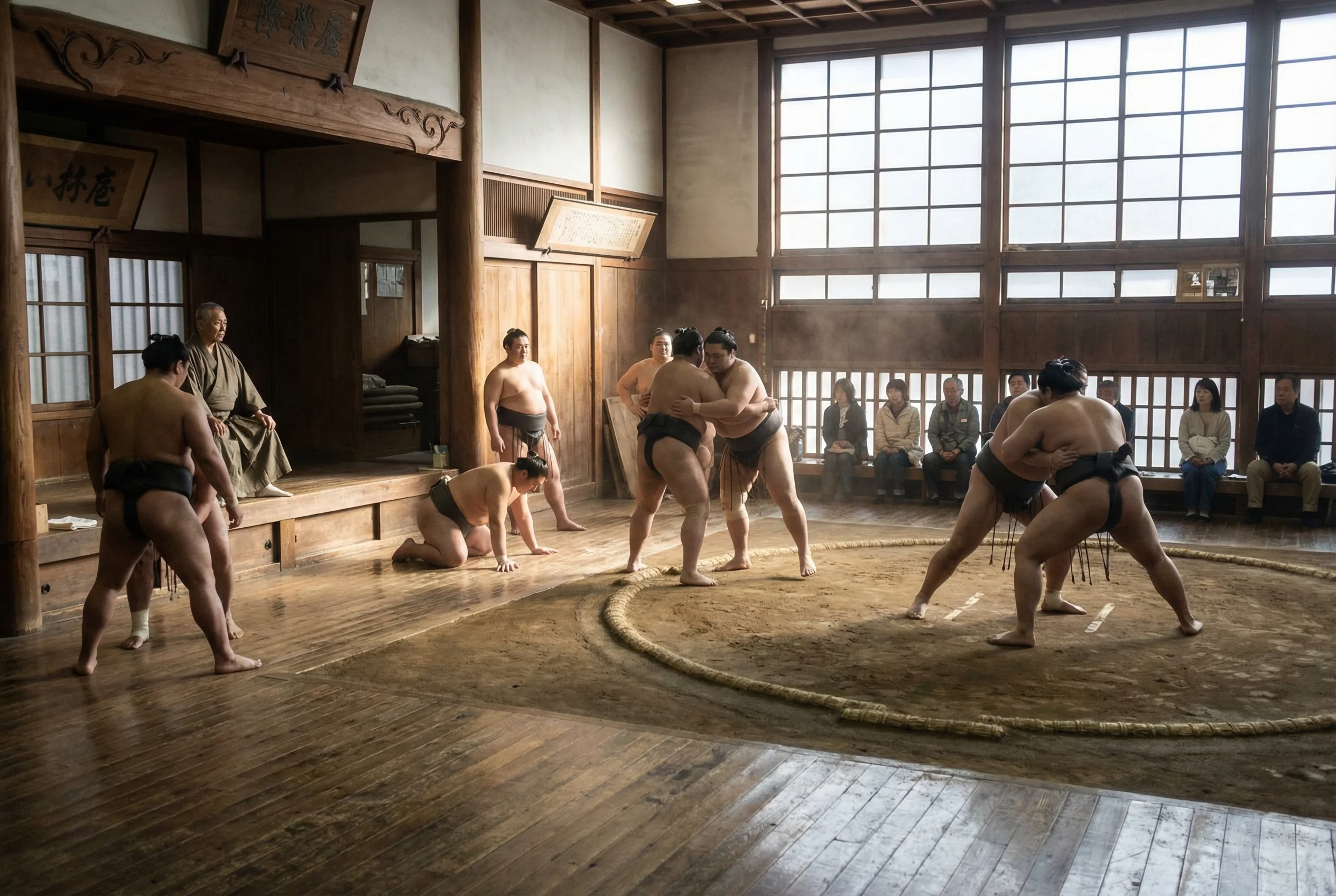
Asageiko (morning practice) is far more than training—it's a sacred practice deeply rooted in Japanese spirituality and tradition spanning 1,500 years. These sessions preserve authentic sumo culture that tournament attendance cannot capture.
🌅 Why Morning Practice is Special
- 100% Free at many stables
- Intimate setting - watch from just meters away
- Authentic experience - no performance, pure training
- See hierarchy in action - traditional stable culture
- Photo opportunities (without flash)
⏰ Timing & Schedule Details
Morning practice typically begins between 5:00-7:30 AM and continues for 2-4 hours. The exact start time varies by stable and season.
📅 When Practice Occurs
- ✅ Regular weekdays (Monday-Friday)
- ❌ NOT during tournaments (wrestlers are competing - check our 2026 tournament schedule)
- ❌ NOT on weekends (rest days)
- ❌ NOT on national holidays
- ⚠️ Call ahead ALWAYS - schedules change daily
🗓️ Best Times to Visit
May-November
Outside tournament season
Tokyo (Ryogoku)
Highest concentration of stables (see our area guide)
Book in Advance
1-2 weeks ahead recommended
🥋 The Complete Practice Structure
Morning practice follows a strict hierarchy system where lower-ranked wrestlers begin early with fundamental conditioning while senior wrestlers join later.
Phase 1: Individual Warm-Up (30-60 minutes)
Junior wrestlers arrive first and begin with fundamental exercises:
- Shiko (leg stomping) - builds hip strength and balance
- Suriashi (foot sliding) - develops footwork without lifting feet
- Stretching - flexibility and injury prevention
Phase 2: Drilling & Technique Refinement (60-90 minutes)
As more wrestlers arrive, training intensifies:
- Teppo (pole thrusting) - develops pushing power against wooden posts
- Butsukari-geiko (collision pushing) - junior wrestlers drive forward against stationary senior wrestlers
- Partner drills - specific techniques practiced repeatedly
Phase 3: Practice Bouts (60-90 minutes)
The most exciting phase where wrestlers compete:
- Sanban-geiko - continuous practice matches between two wrestlers
- Moshiai-geiko - tournament-style practice where winners stay in the ring and choose opponents
- Senior guidance - oyakata (stable master) observes and corrects
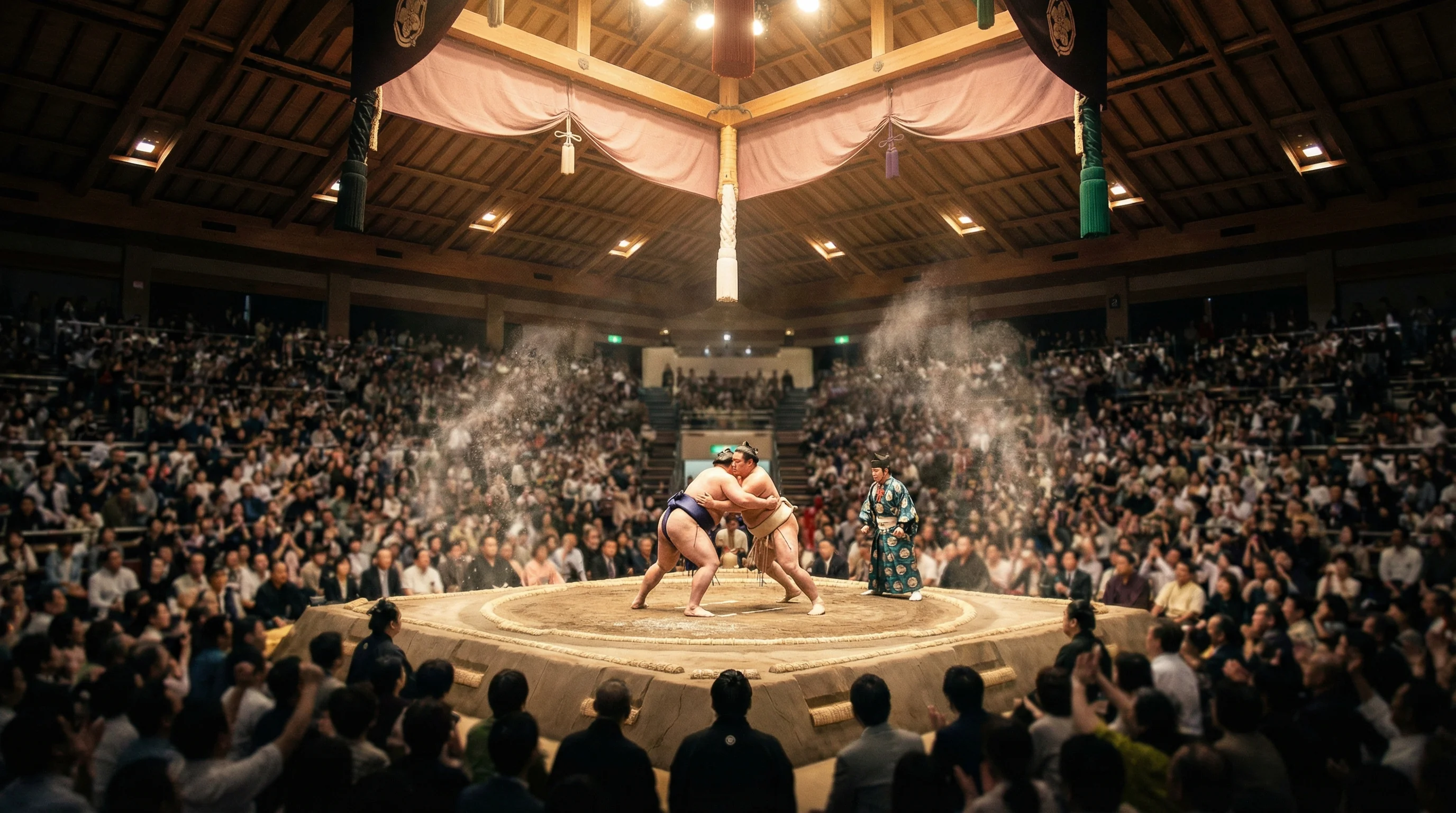
💪 Training Techniques Explained
Shiko (四股) - Leg Stomping
The foundational sumo exercise where wrestlers lift each leg high and stomp forcefully. This builds:
- Hip flexibility and strength
- Balance and core stability
- Lower body power
- Ritual purification of the ring
Teppo (鉄砲) - Pole Thrusting
Wrestlers thrust their palms repeatedly against a wooden pole, simulating pushing an opponent. Develops explosive pushing power and proper hand positioning.
Butsukari-geiko (ぶつかり稽古) - Collision Practice
Moshiai-geiko (申し合い稽古) - Tournament-Style Practice
Winners stay in the ring and can choose their next opponent. This simulates tournament pressure and allows senior wrestlers to test juniors or challenge equals.
🎫 Practical Visitor Information
Free vs Guided Tours
| Option | Cost | Booking | Best For |
|---|---|---|---|
| Free Window Viewing | ¥0 | Call ahead or walk-up | Budget travelers, authentic experience |
| Guided Tours | ¥8,000-15,000 | Book online in advance | First-timers, want English explanations |
🏛️ Recommended Stables in Ryogoku
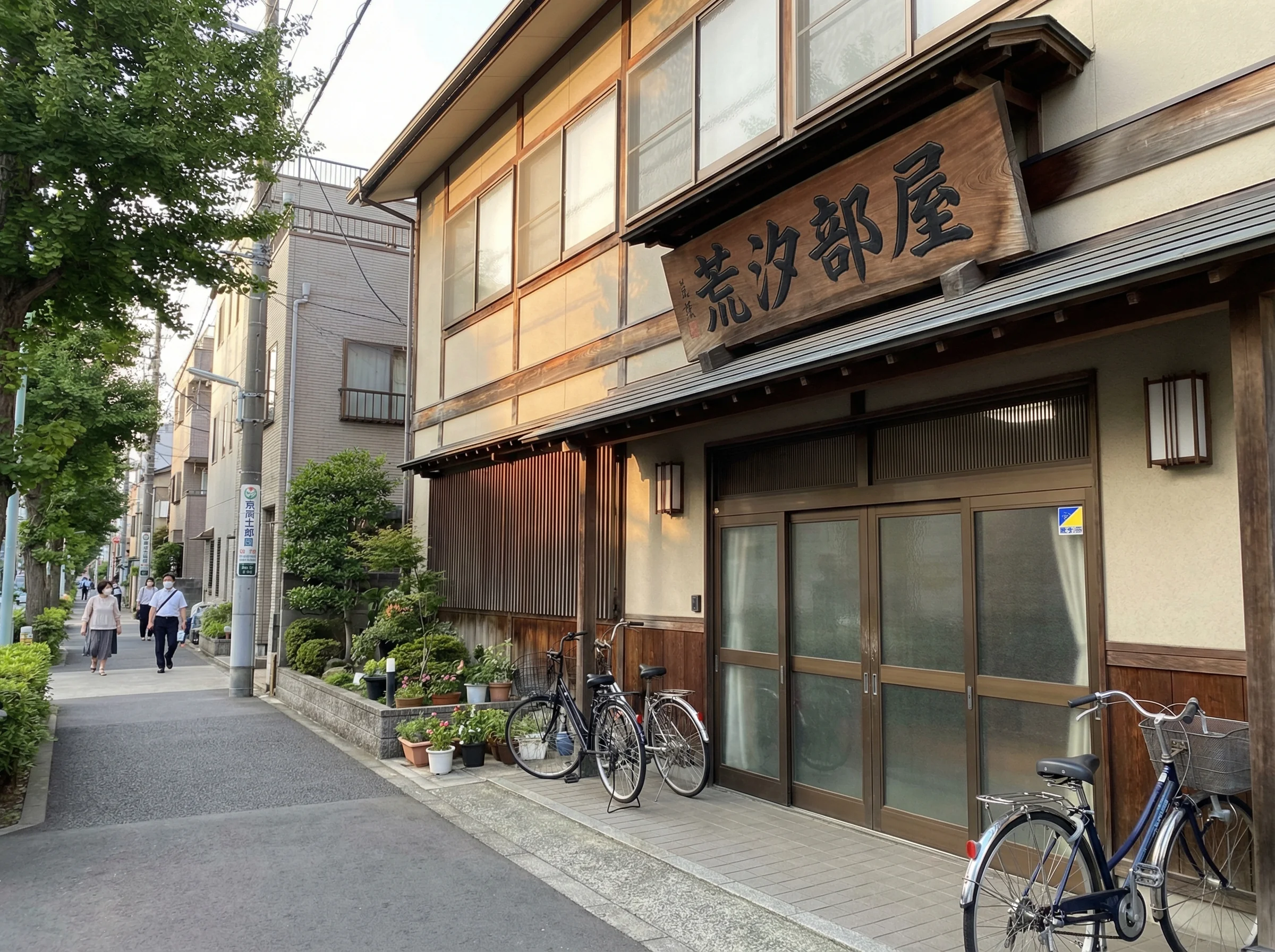
🥇 Arashio-beya (Arashio Stable)
MOST TOURIST-FRIENDLY
- ✅ Window viewing available (watch from outside)
- ✅ No reservation required for window viewing
- ✅ Very close to Ryogoku Kokugikan
- ✅ English-friendly staff
- 📍 Address: 2-47-2 Ryogoku, Sumida-ku, Tokyo
- ⏰ Usually starts 6:30-7:00 AM
Other Notable Stables
- Kasugano Stable - Strict but rewarding, requires reservation
- Iseghama Stable - Good for beginners, moderate rules
- Takasago Stable - Requires advance booking
- Tomozuna Stable - Smaller, intimate setting
📞 How to Book (For Non-Japanese Speakers)
Step-by-Step Booking Process
- Contact 1-2 weeks in advance - earlier is better
- Call during business hours (9 AM - 5 PM Japan time)
- Use simple English or Google Translate
- Provide: Name, number of people, preferred date(s)
- Confirm: Time to arrive, address, rules
- Arrive 10-15 minutes early
🙏 STRICT Etiquette Rules (NON-NEGOTIABLE)
❌ Absolute Prohibitions
- NO talking - Not even whispering. Complete silence.
- NO standing or moving during bouts - Stay seated/stationary
- NO mobile phones - Turn off completely (not silent)
- NO flash photography - Non-flash photos usually OK (ask first)
- NO eating or drinking - Wait until after practice
- NEVER touch the dohyo - Sacred ring, forbidden to spectators
- NO video recording (at most stables)
- NO pointing at wrestlers or stable master
✅ Required Behaviors
- Arrive on time - Late entry not permitted
- Remove shoes before entering viewing area
- Sit in seiza or cross-legged - No stretching legs out
- Bow upon entering and exiting
- Follow all stable staff instructions immediately
- Dress modestly and respectfully
- Leave quietly when practice ends
Why These Rules Exist
Sumo stables are religious training environments, not tourist attractions. The dohyo is a sacred Shinto space. Wrestlers are training for their livelihoods, not performing. Respect is paramount - you are a privileged guest observing a 1,500-year-old tradition.
👀 What to Expect: The Sensory Experience
🔊 Sounds You'll Hear
- Thunderous stomping - Shiko leg raises shake the building
- Explosive grunts - "DOSUKOI!" during charges
- Sharp commands - Oyakata (stable master) instructions
- Bodies colliding - Butsukari impact is visceral
- Heavy breathing - Athletes at maximum exertion
👁️ Visual Experience
- Hierarchy on display - Junior wrestlers clean, serve, train first
- Intense focus - No smiling or casual behavior
- Raw power - 150-200kg athletes moving explosively
- Traditional setting - Simple, no-frills training hall
- Sweat and effort - Authentic athletic training
🧠 Understanding the Hierarchy
Stable Hierarchy (Top to Bottom)
- Oyakata (親方) - Stable master, former wrestler
- Sekitori (関取) - Top division wrestlers (Makuuchi, Juryo)
- Makushita & Below - Lower division wrestlers
- Tsukebito (付け人) - Attendants/assistants (lowest rank wrestlers)
Lower-ranked wrestlers serve upper ranks - preparing meals, cleaning, helping dress. This system has existed for centuries.
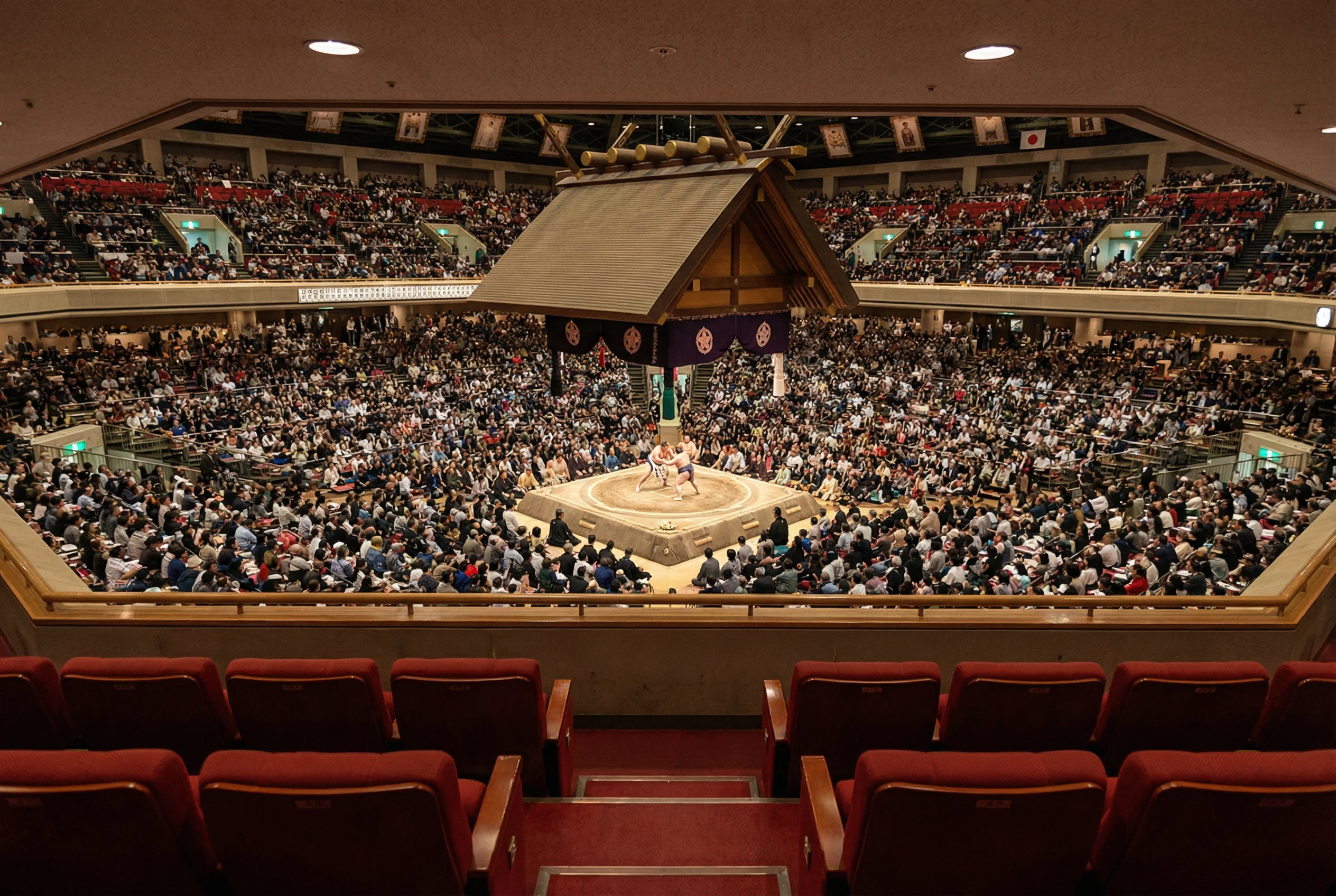
🗺️ Travel Planning & Practical Tips
📍 Getting to Ryogoku Stables
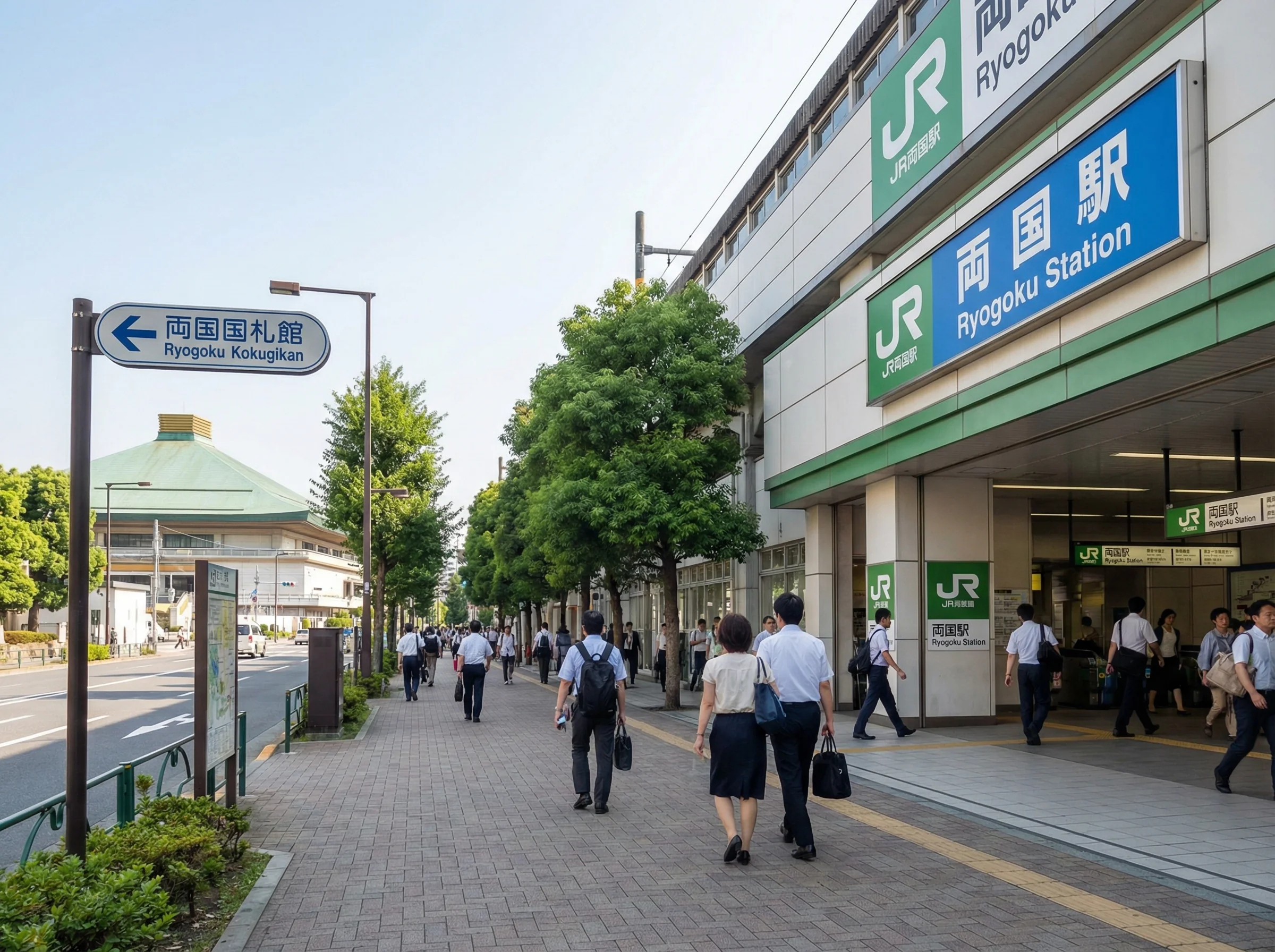
- JR Ryogoku Station - Exit west side for most stables (see our detailed transportation guide)
- Walk 5-15 minutes depending on stable
- Google Maps essential - Stables blend into neighborhoods
- Arrive early - Better viewing spots, shows respect
⚠️ Challenges to Consider
Early Wake-Up
5:00-6:30 AM start times
Language Barrier
Limited English at stables
Weather Dependent
Some stables cancel in bad weather
Advanced Booking
Popular dates fill quickly
✅ Before You Go Checklist
- ☐ Called/emailed stable to confirm reservation
- ☐ Verified practice is happening (not tournament week)
- ☐ Set multiple alarms for early wake-up
- ☐ Charged camera (no flash!)
- ☐ Comfortable clothes for sitting on floor
- ☐ Small bag (leave at entrance if required)
- ☐ Cash for any fees (most stables are free)
- ☐ Directions downloaded offline
- ☐ Reviewed etiquette rules
🌟 Why Morning Practice is Unforgettable
Attending asageiko transforms sumo from a spectator sport into a profound cultural experience. You'll witness the discipline, hierarchy, and sacred traditions that have preserved this sport for over a millennium.
What Makes It Special
- ✅ Authentic - No performance, pure training
- ✅ Intimate - Meters away from world-class athletes
- ✅ Free - Incredible value
- ✅ Educational - Learn sumo techniques and culture
- ✅ Memorable - Highlight of many Japan trips
Whether you visit independently or join a guided tour, asageiko offers a window into traditional Japan that few tourists experience. Prepare properly, respect the rules, and you'll create memories that last a lifetime.